



does captiva's name derive from josé gaspar, also known as gasparilla the pirate, who used the island to secure his captives?
Folklore
The Legendary Pirate Behind a Captiva Myth
According to a familiar island legend, Captiva received its name because the Spanish pirate José Gaspar—also known as Gasparilla—used the island to hold captives for ransom. It is a memorable story, but there is no historical evidence that Gaspar ever existed or that he had anything to do with naming Captiva.
The legend describes Gaspar as a Spanish naval officer who turned pirate and established a base near Charlotte Harbor in the late eighteenth century. From there, he supposedly plundered ships, accumulated treasure, and held prisoners on nearby islands. Captiva became the setting for his captives, while Gasparilla Island became his headquarters. The story ends dramatically in 1821: facing capture by an American naval vessel, Gaspar wraps himself in an anchor chain and plunges into the sea. These adventures belong to the legend, rather than to documented history.
How the Story Spread
In the early twentieth century, it is said the Charlotte Harbor and Northern Railway circulated a brochure promoting Boca Grande and its resort hotel, known as the Gasparilla Inn. The brochure presented the pirate’s adventures as part of the area’s colorful past, adding the enticing suggestion that his treasure remained buried nearby. Romance, mystery, and undiscovered riches made an appealing invitation to prospective visitors.
Publicist Pat Lemoyne is credited with writing promotional accounts to attract visitors and property buyers to Boca Grande and the Gasparilla Inn.
Florida author Jack Beater helped keep the legend alive with The Gasparilla Story, first published in 1949. His adventure narrative claimed support from an old Cuban manuscript and a map, neither of which was made available for verification. Beater’s writing became another example of how an entertaining pirate story could be mistaken for a factual biography.
Where Legend Meets the Historical Record
Historical and archaeological research has produced no substantiated evidence of Gaspar’s presence in Southwest Florida. More directly relevant to Captiva, the island’s name appears on maps that predate the pirate’s supposed arrival. The explanation that Gaspar named Captiva for his prisoners therefore conflicts with the historical record.
The legend also found a lasting home in Tampa, where the first Gasparilla celebration took place in 1904. Its popularity helped preserve the pirate’s place in Florida’s imagination. Today, Gasparilla remains a colorful part of regional folklore—but his supposed captives do not provide a documented explanation for Captiva’s name.
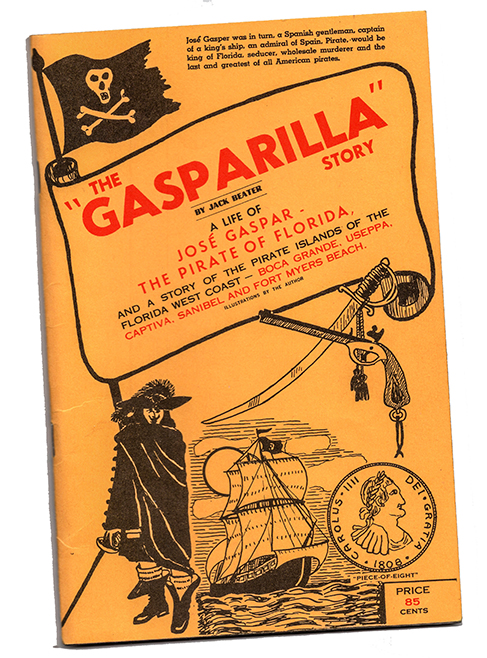
Jack Beater's The Gasparilla Story (second printing 1952)
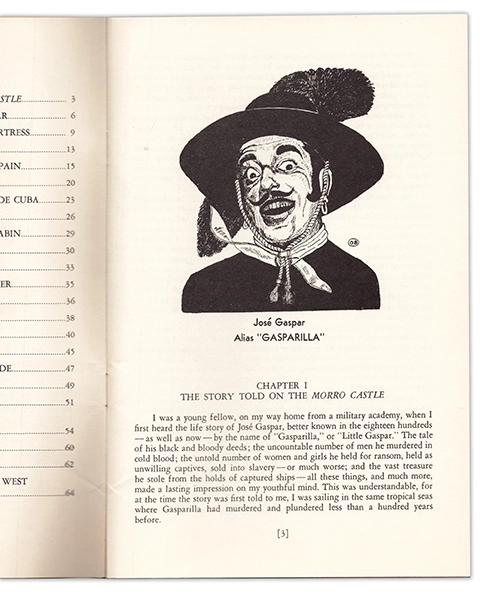
An imagined portrait of José Gaspar, the legendary pirate known as Gasparilla, from Jack Beater’s The Gasparilla Story
(second printing, 1952).